
The Restoration Technician Training Handbook
A complete, customisable training framework for cleaning and restoration businesses
— built from over 30 years of industry experience.
Training a restoration team takes more than good intentions. It takes a structured system — one where every technician knows exactly what's expected of them at every stage of their development, and where managers have the tools to guide, track, and develop their people with confidence.
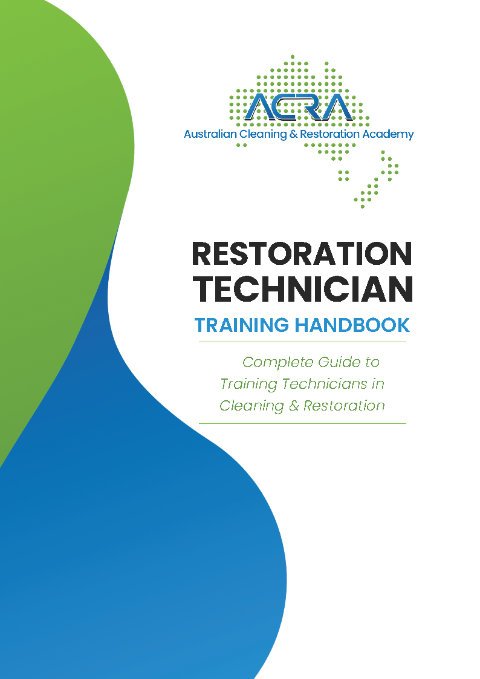
The ACRA Restoration Technician Training Handbook is that system. Developed by Garry Carroll and the team at the Australian Cleaning & Restoration Academy, it gives business owners and operators a proven, step-by-step framework to train technicians consistently, track their progress with formal sign-off checkpoints, and build a team that performs to a professional standard on every job.
More Than a Training Manual
The Technician Training Handbook solves a problem that most restoration businesses face: the gap between what technicians learned in training and what actually happens on the job.
Rather than relying on verbal instructions or faded memories of past training, technicians have a clear, competency-based reference for every task — from setting up drying equipment to conducting moisture readings. Managers, in turn, have a shared framework they can use to assign work, guide development, and assess readiness to progress, without having to repeat themselves or leave things to chance.
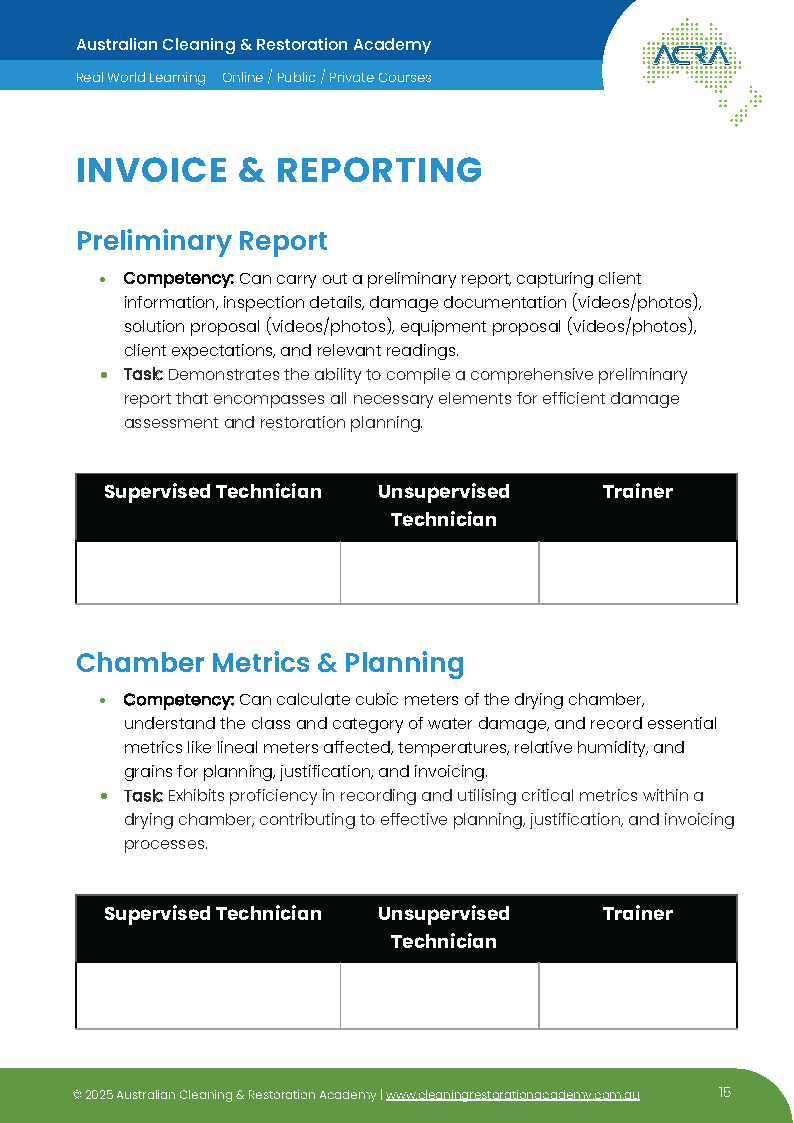
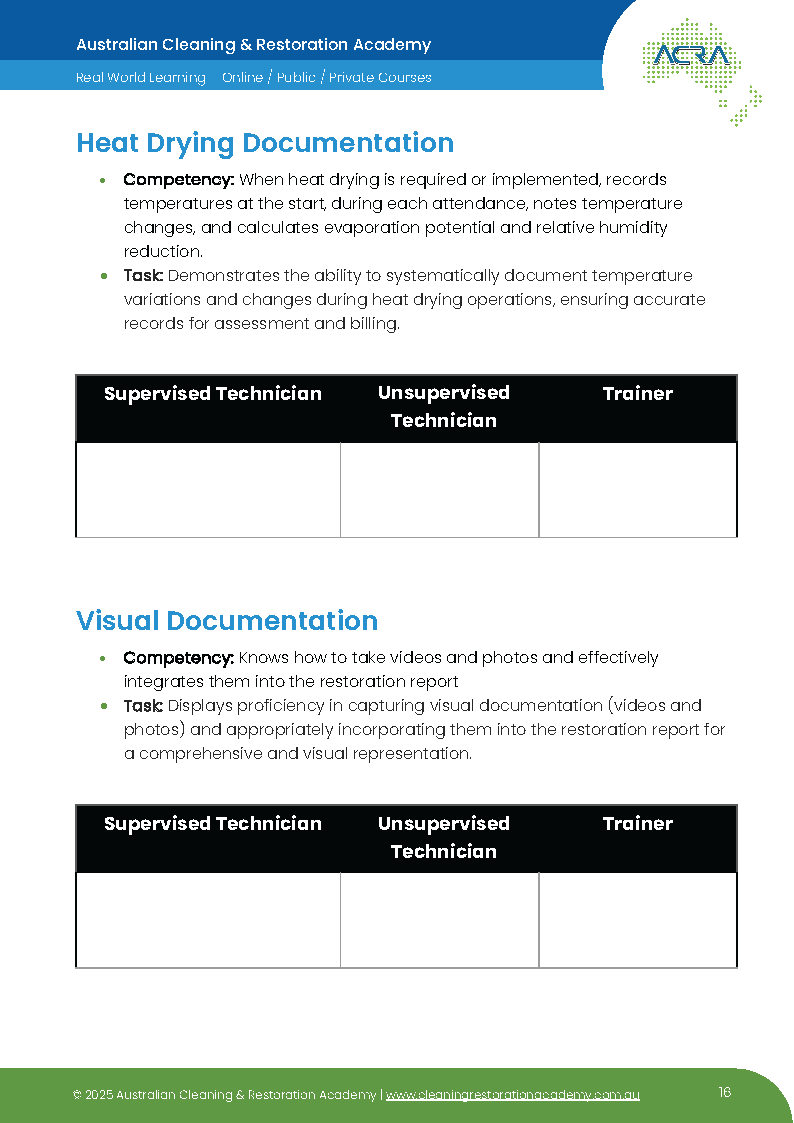
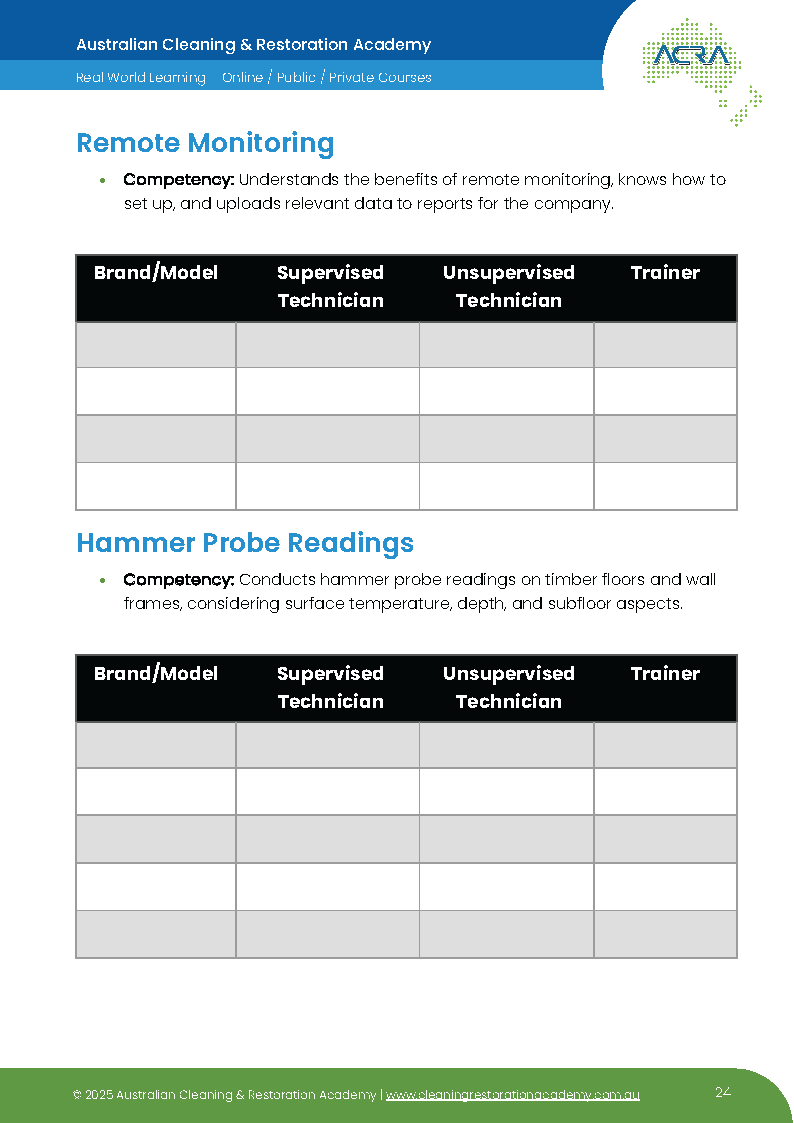
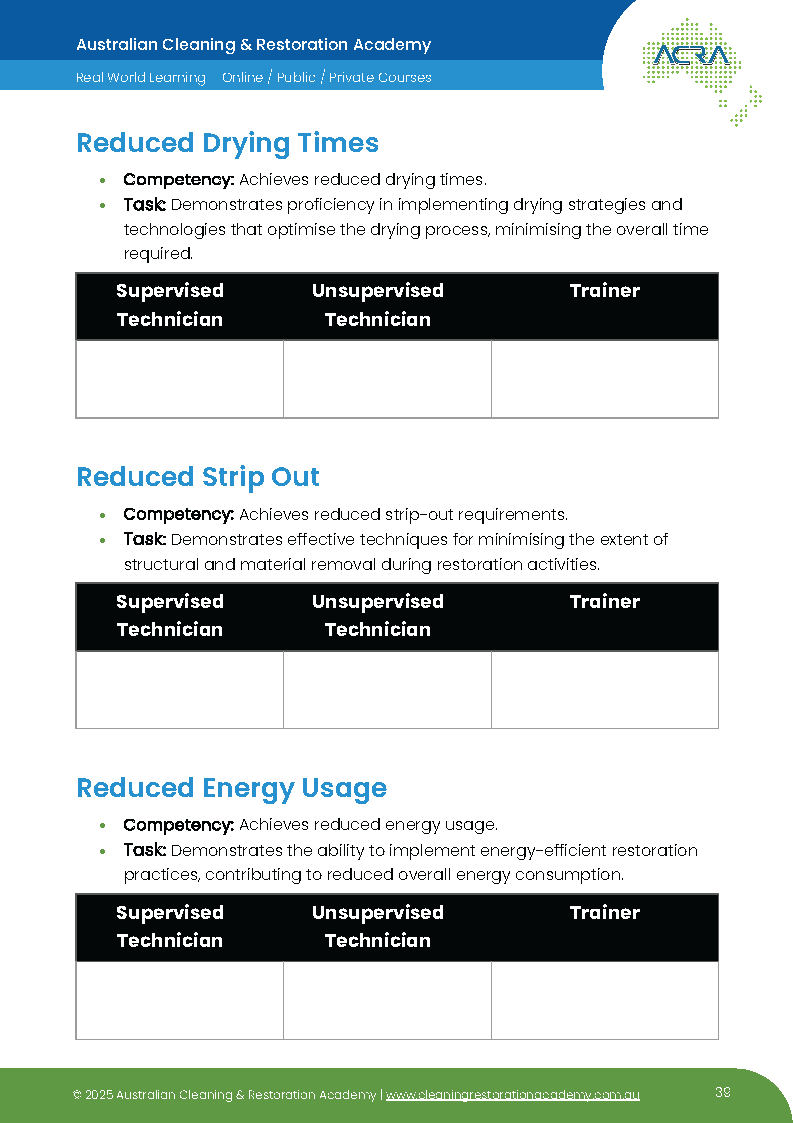
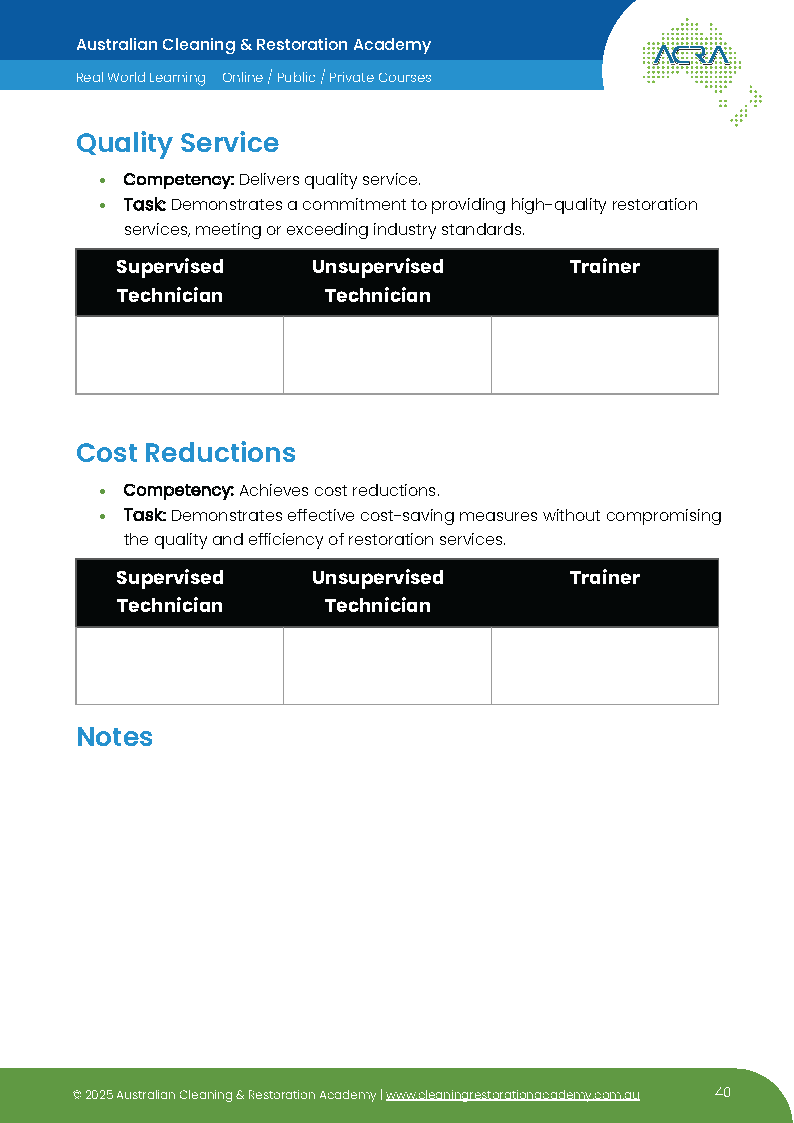
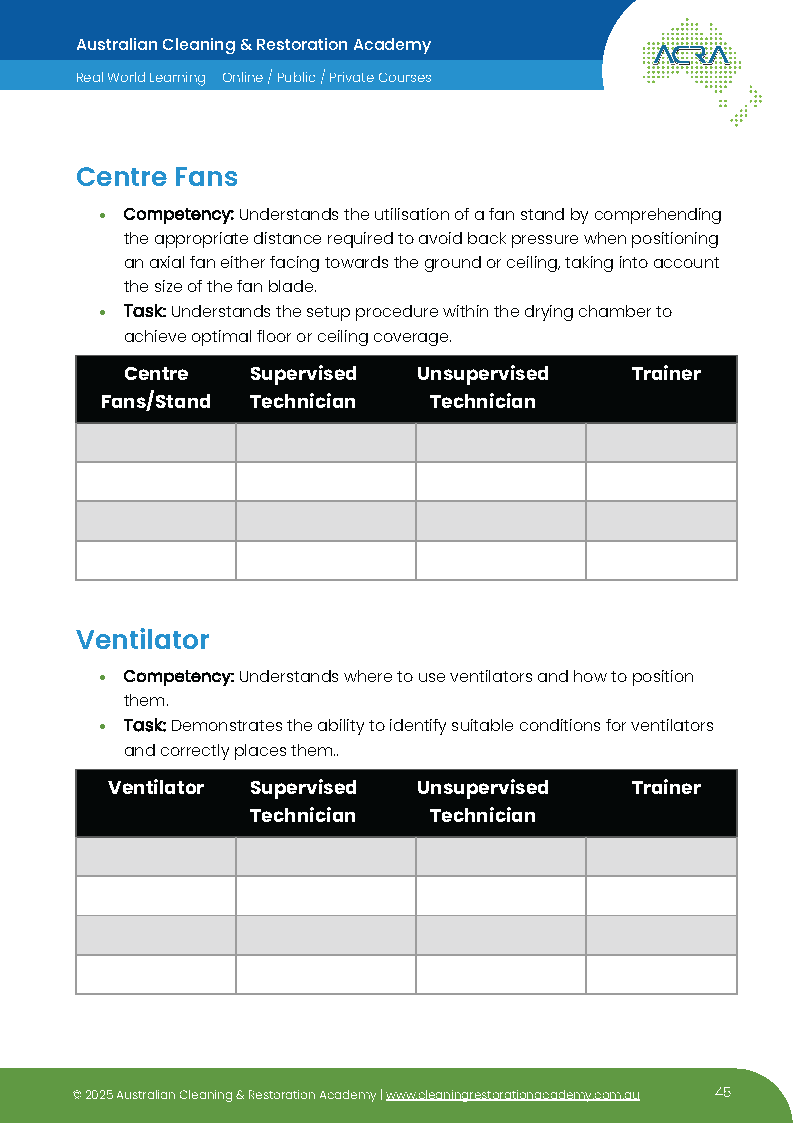
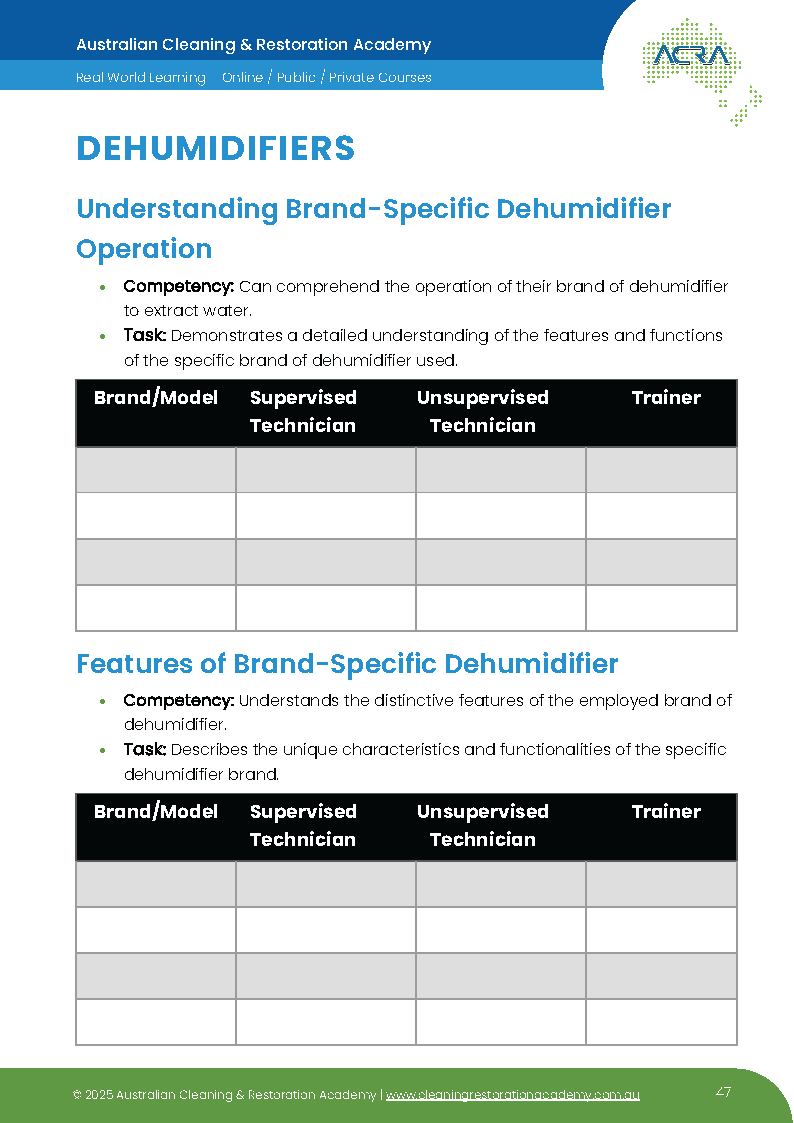
Every competency in the handbook has three formal sign-off columns — Supervised Technician, Unsupervised Technician, and Trainer — each with a date and an authorising name. There's no ambiguity about where someone is in their development, and no room for shortcuts.
See How It Works
Watch Garry Carroll walk through the Restoration Technician Training Handbook and how it can be put to use in your business.
What's Inside the Handbook
The handbook covers the full scope of mould remediation and restoration operations, from the moment a technician arrives on site to the final invoice. Topics include:
Inspection & Assessment · Moisture Detection · Thermal Imaging · Extraction · Air Movement & Dehumidification · Containment · Air Cleaning & Hydroxyl · Ozone · Heat Drying · Mould Remediation · Fire Remediation · Chemical Use · Scoping & Estimating · Invoicing & Reporting · Safety & WHS · Client Relations · Power & Circuitry · Business Management · Communication Protocols · Vehicle Presentation · Revenue-Generating Expertise
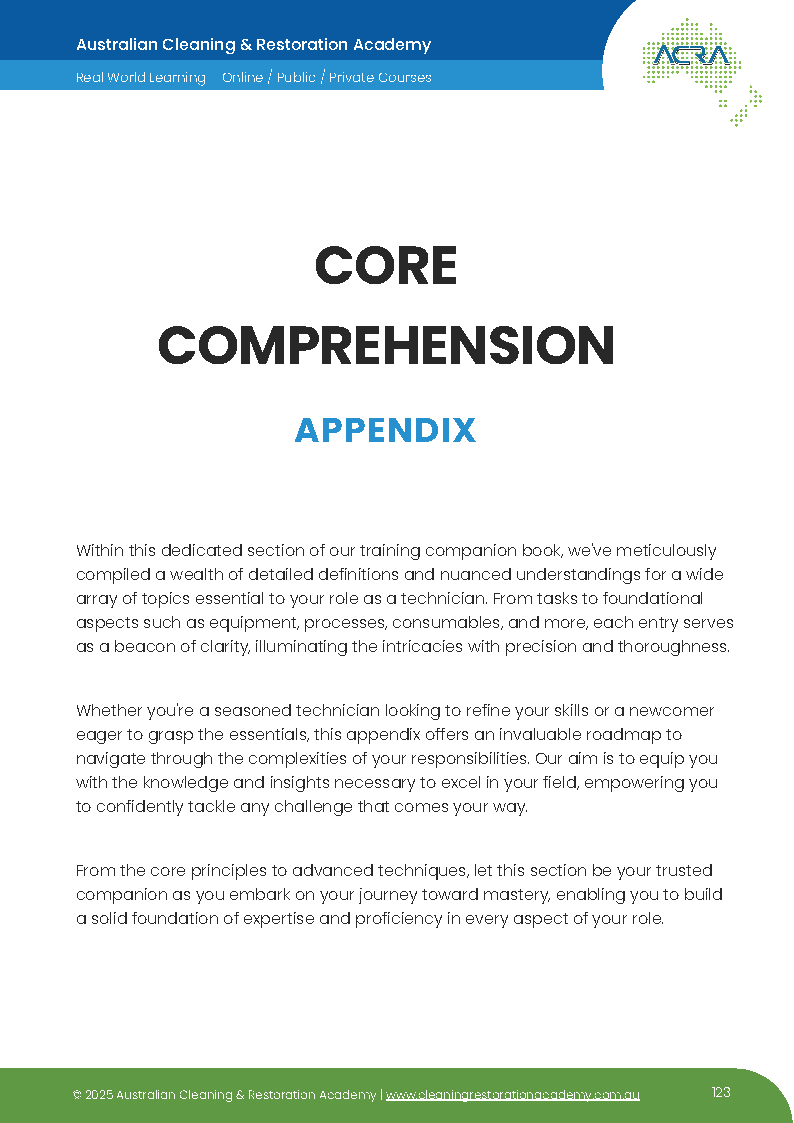
The handbook also includes a comprehensive Core Comprehension Appendix — an in-depth reference section covering the theory behind the tools and techniques, from how thermal cameras work to dehumidifier formulas, containment methods, mould characteristics, and more. It's designed to be used on the job, not just filed away.
How It Works
The handbook follows a four-phase training progression:
1. Theory
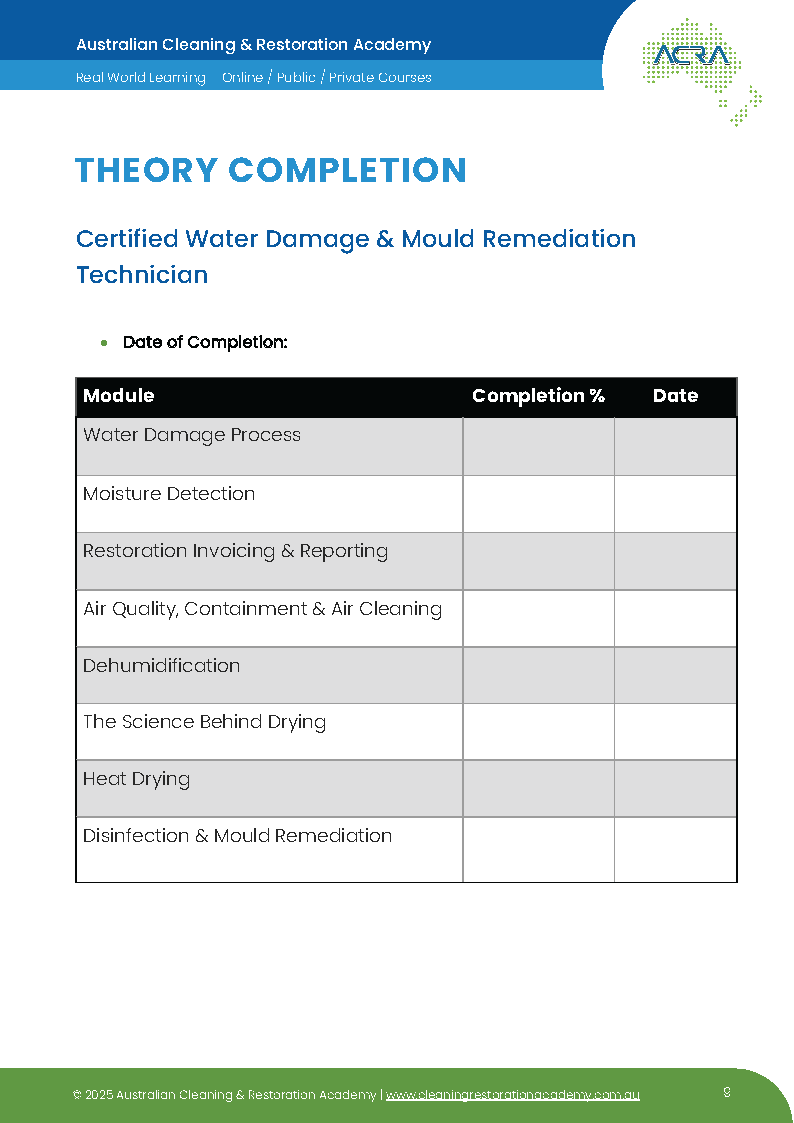
Technicians complete relevant ACRA online or in-person course modules before working in the field. The handbook maps directly to ACRA's recognised courses, including the Water Damage, Structural Drying & Mould Remediation course and the Workplace Health & Safety in Restoration series. Online assessments across 8 modules must be passed at a minimum 75% before progressing.
2. Supervised Technician
Working alongside an approved trainer on real jobs, technicians begin applying their knowledge under guidance. Skills are signed off with a date and an authorised name as each competency is demonstrated.
3. Unsupervised Technician
Technicians execute tasks independently, demonstrating the competence and confidence to handle jobs without oversight. A second formal sign-off confirms readiness.
4. Trainer
Technicians who demonstrate exceptional knowledge and the ability to communicate it to others are recognised as Trainers — the only people with authority to sign off on others progressing through the framework.
This structured progression means development conversations between managers and technicians are grounded in something concrete — not opinion, but documented, dated evidence of what someone can and can't yet do.
Built for Your Business
No two restoration companies operate identically. The handbook is designed to be adapted to your specific equipment, services, and workflows — so the training your team receives is directly applicable to the work they do for you.
Managers can use it to create tailored development plans, identify gaps in individual knowledge, and coach technicians with targeted questions: "How would you approach a moisture detection task?" "What steps would you take to set up a containment area?" These aren't hypotheticals — they're competencies the technician will have worked through in the handbook.
Whether you're onboarding a new hire, upskilling an experienced operator, or bringing consistency to a growing team, the handbook gives you the structure to do it properly.
Key benefits:
Standardise training and expectations across your entire workforce
Eliminate knowledge gaps between team members
Reduce time managers spend explaining tasks verbally
Track progress with formal, dated sign-off checkpoints at every stage
Train in any format — on-the-job, in person, or online
Complement your team's ACRA course enrolments with a real-world field framework
Support ongoing coaching, mentoring, and performance conversations
Works Alongside ACRA Courses
The handbook is designed to integrate with ACRA's online and in-person training programs. Theory modules from courses including the Certified Water Damage & Mould Remediation Technician and the WHS in Restoration series feed directly into the handbook's competency framework — so there's no disconnect between what technicians learn in training and what they're expected to demonstrate on the job.
Ready to Build a Better-Trained Team?
Get in touch with the ACRA team to find out how the Technician Training Handbook can work for your business.